Stories behind the quizzes
A little context makes a playful question more interesting.
Explore twenty essays from the Quizooly collection, now part of Akkopo. Browse all 26 notebook stories ↗
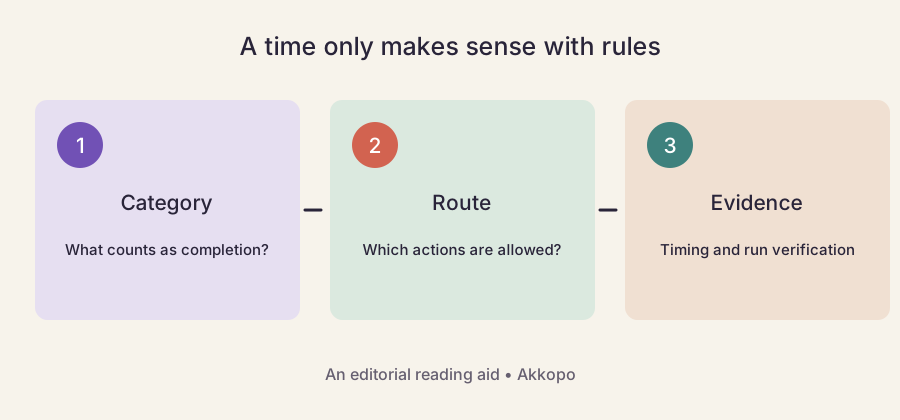
The Rise of Speedrunning
How a habit of recording Doom demos grew into a sport with written rulebooks, volunteer referees, robot-perfect benchmarks and charity marathons watched by millions.
Read the story ↗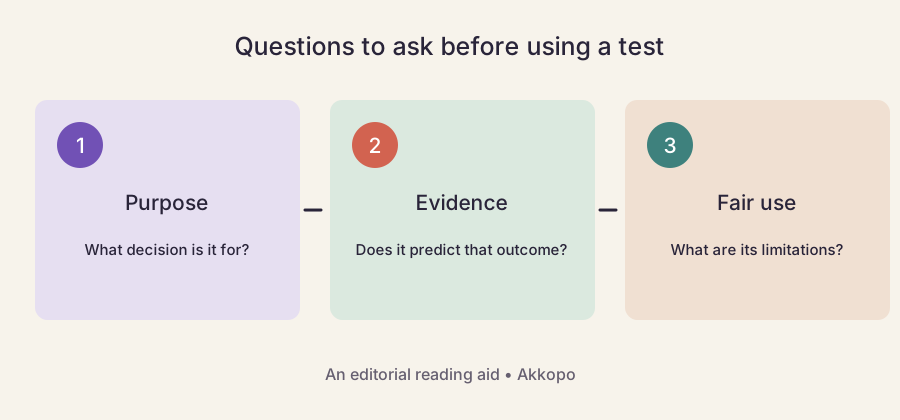
Personality Tests at Work: What They Can and Cannot Do
Workplace assessment is a century old and unevenly evidenced. What selection research actually shows, what the law requires, and how to read a result you did not ask for.
Read the story ↗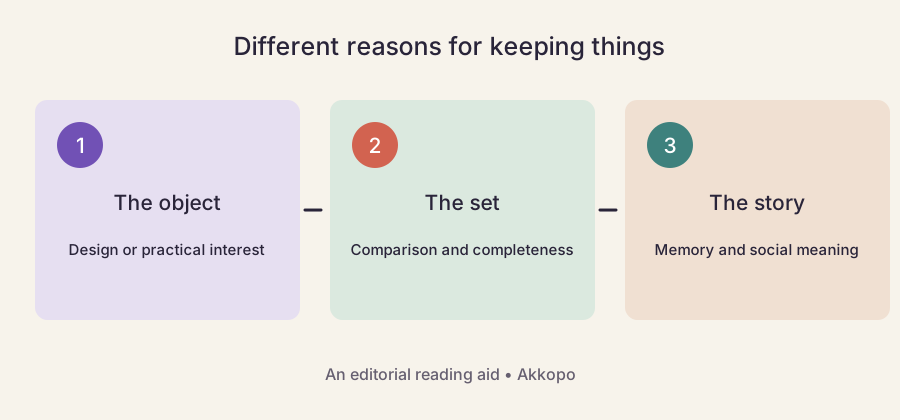
The Psychology of Collecting
Completion drive, the endowment effect and cabinets of curiosity: what collections do for the people who keep them, and where clinicians draw the line.
Read the story ↗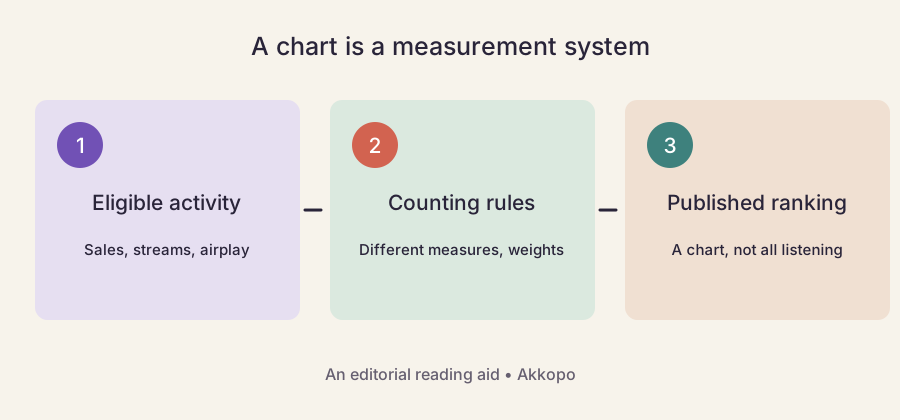
How Music Charts Are Actually Measured
Phone surveys, barcodes, streaming exchange rates and banned bundles. A number one is less a fact about the public than a fact about a formula that keeps being rewritten.
Read the story ↗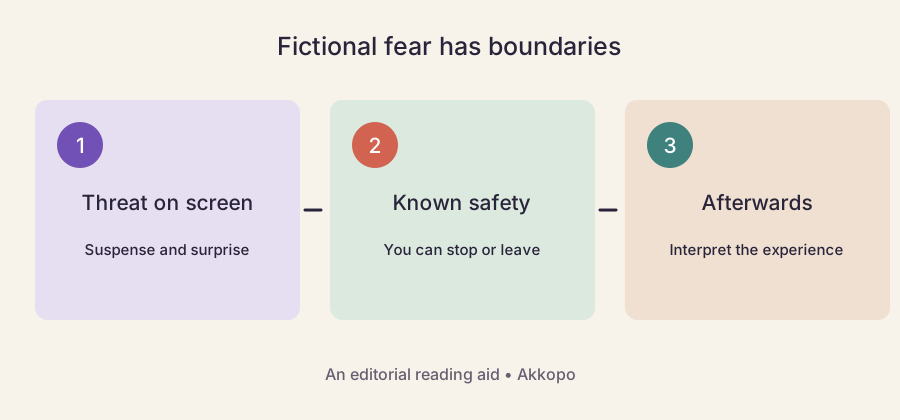
Why We Love Being Scared
Benign masochism, the inverted U of a haunted house, and why the best part of a horror film is often the ten minutes after it ends.
Read the story ↗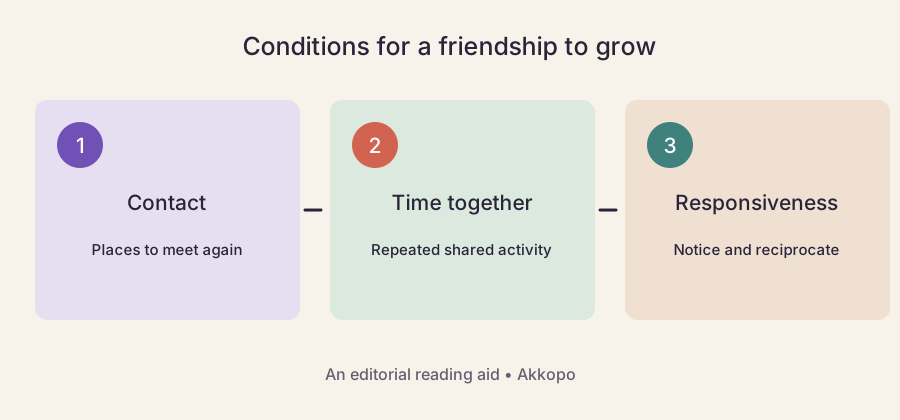
How Friendship Actually Works
Adult friendship is built from hours, proximity and repetition rather than compatibility. What the research shows, including the parts that are still being argued over.
Read the story ↗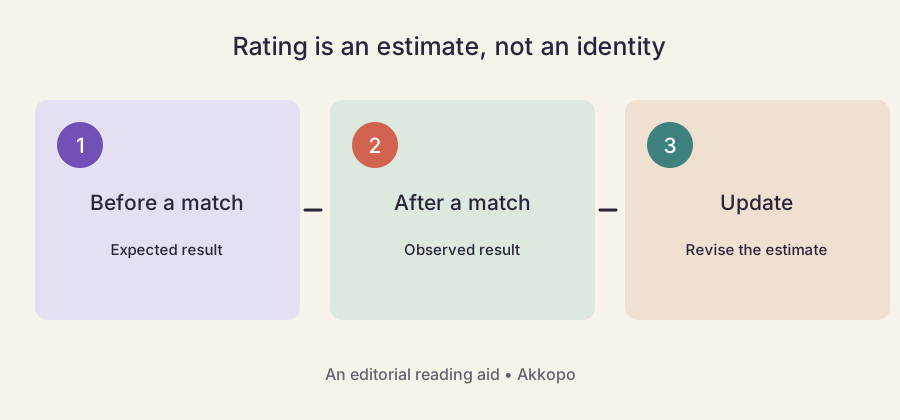
How Matchmaking Actually Ranks You
Chess ratings, Bayesian skill estimates, smurfs, party queues and the awkward trade between fair games and short waits. What the number beside your name is for.
Read the story ↗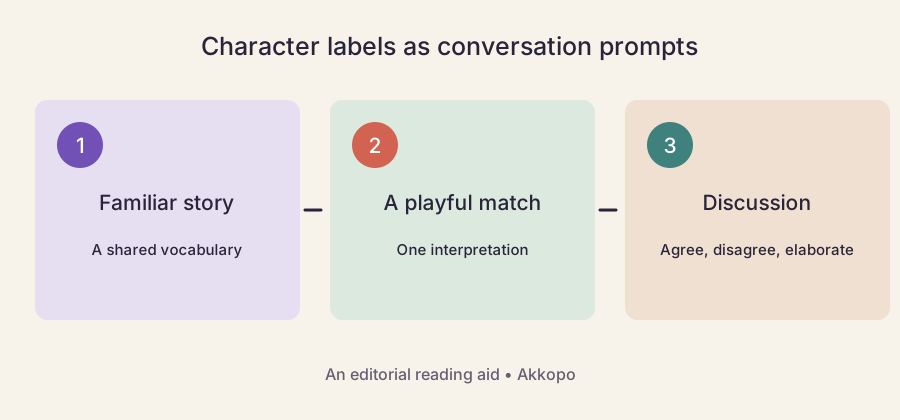
Why 'Which Character Are You' Never Dies
A format older than the internet, propped up by 1950s magazine editors, a 1956 psychiatry paper and thirty years of fandom research. Here is why it refuses to go away.
Read the story ↗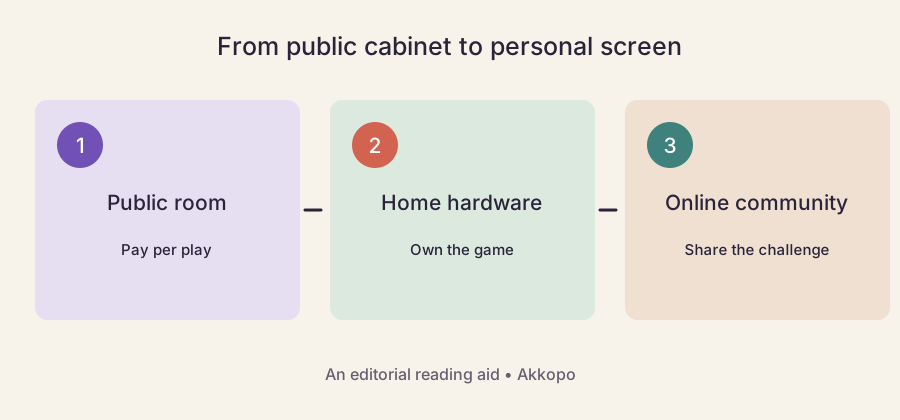
A Short History of the Arcade
Peep-show machines, electro-mechanical submarines, a boom, a crash that was not quite what people remember, and a business model that came back on your phone.
Read the story ↗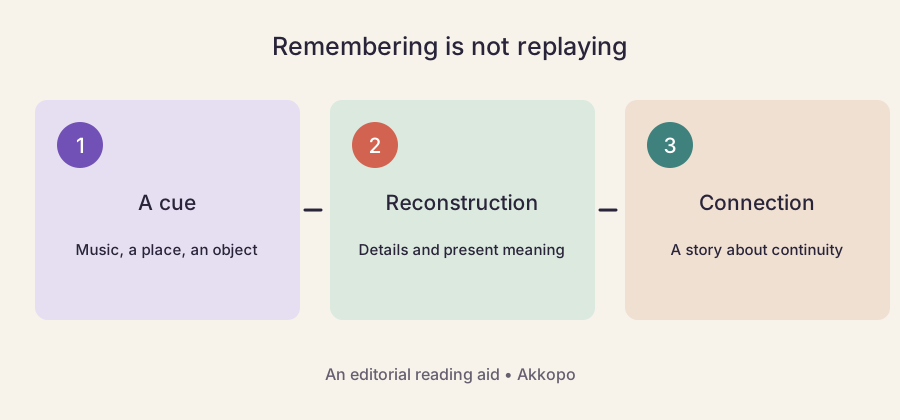
Why Nostalgia Feels So Good
It began as a fatal disease of Swiss soldiers and ended up as a psychological resource. Here is what the research says the feeling is actually for.
Read the story ↗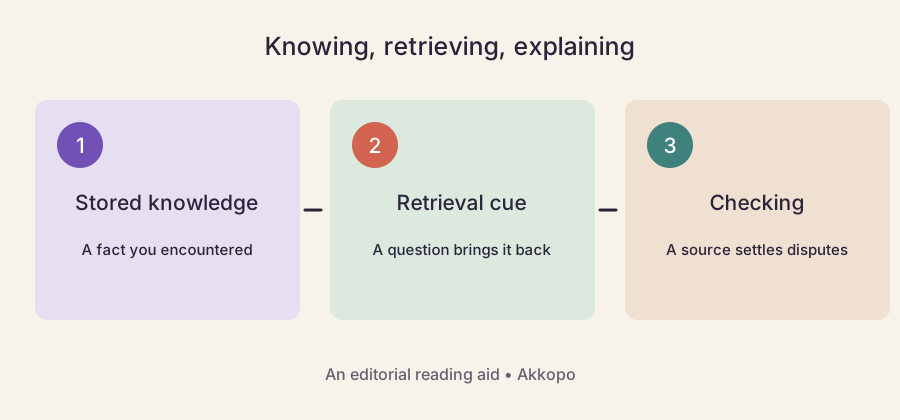
How Trivia Became a Hobby
Pub leagues, a board game drawn on a cigarette carton, and the quiet craft of writing a question that a whole room wants to hear the answer to.
Read the story ↗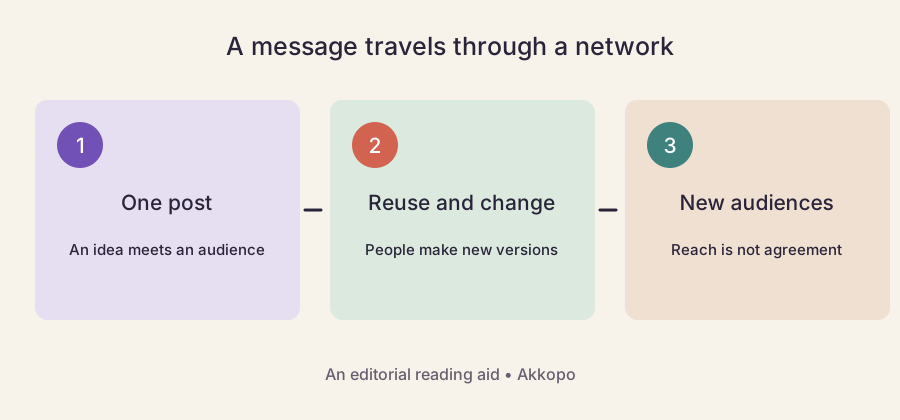
How a Meme Actually Spreads
Dawkins coined the word for something much broader. The internet narrowed it, and in doing so revealed how a format really travels: not by forwarding, but by remaking.
Read the story ↗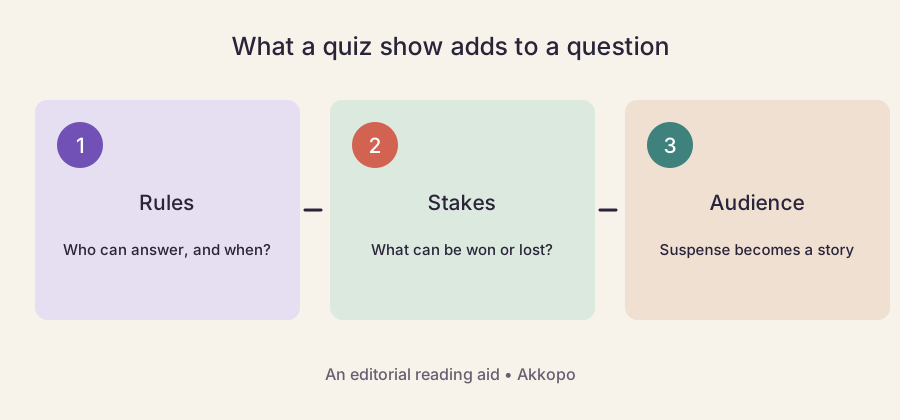
The History of the Quiz Show
From cheap radio filler to rigged jackpots to congressional hearings and back again: how the broadcast quiz was built, broken and rebuilt.
Read the story ↗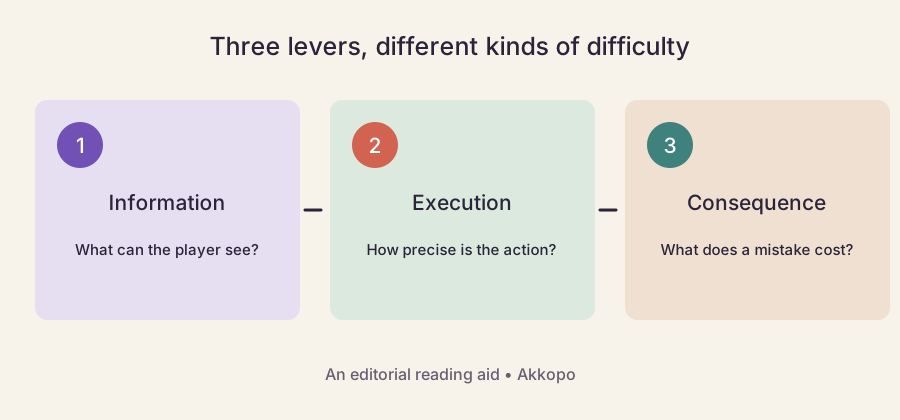
How Game Difficulty Actually Works
Flow theory, hidden adjustment systems, rubber-banding and the long argument about easy modes: what designers really mean when they tune a game's difficulty.
Read the story ↗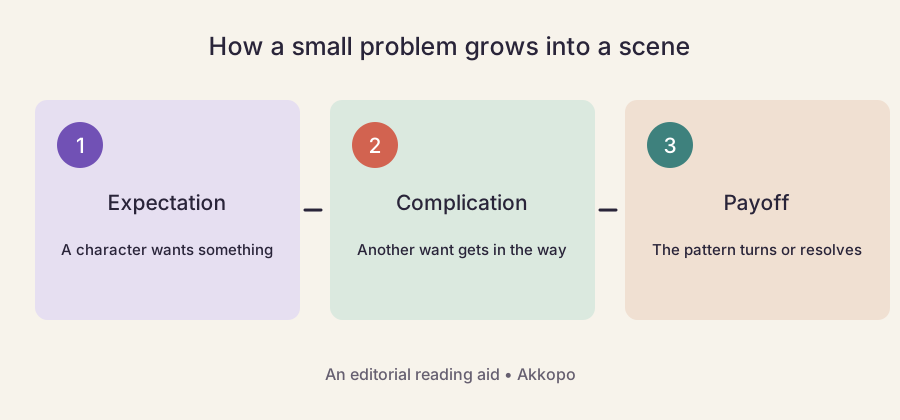
The Sitcom Formula, Explained
Why half an hour, why the same set, why the laughter and why exactly a hundred episodes. Almost every rule of the sitcom started as an accounting decision.
Read the story ↗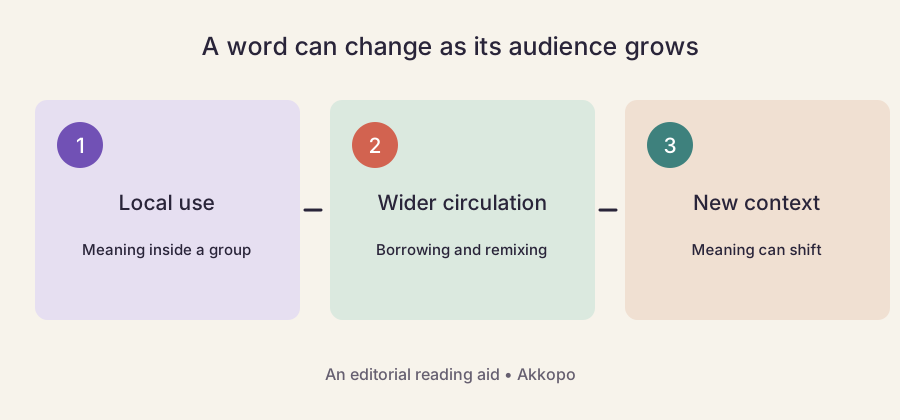
Where Slang Actually Comes From
New words rarely arrive from nowhere. They come from young speakers, from communities on the margins, and from the same slow drift that reshaped the standard vocabulary.
Read the story ↗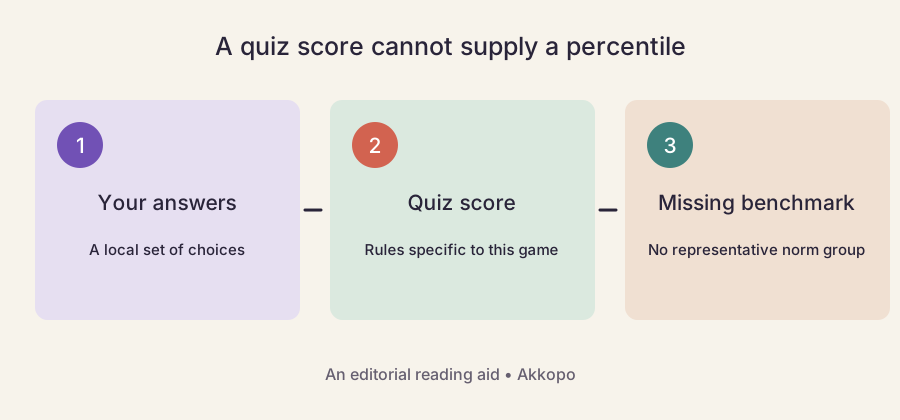
Are Online IQ and Brain Tests Accurate?
Online brain tests make fine entertainment, but a real IQ score comes from a supervised clinical instrument, not a pop-up quiz.
Read the story ↗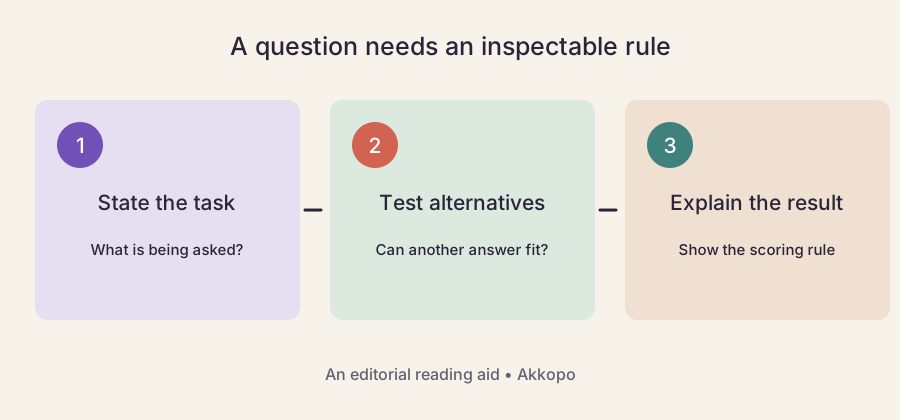
The Rules Every Akkopo Quiz Has to Pass
Results drafted before questions, every outcome reachable, no answer that insults you, and a set of automated checks that refuse to build the site if any of it slips.
Read the story ↗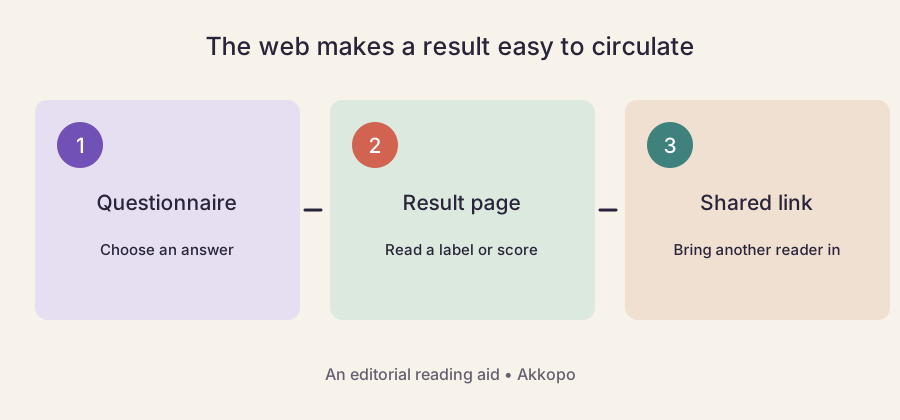
A Short History of the Internet Quiz
From magazine scoring keys to homepage badges to viral city quizzes, the online quiz has been reinventing itself for decades.
Read the story ↗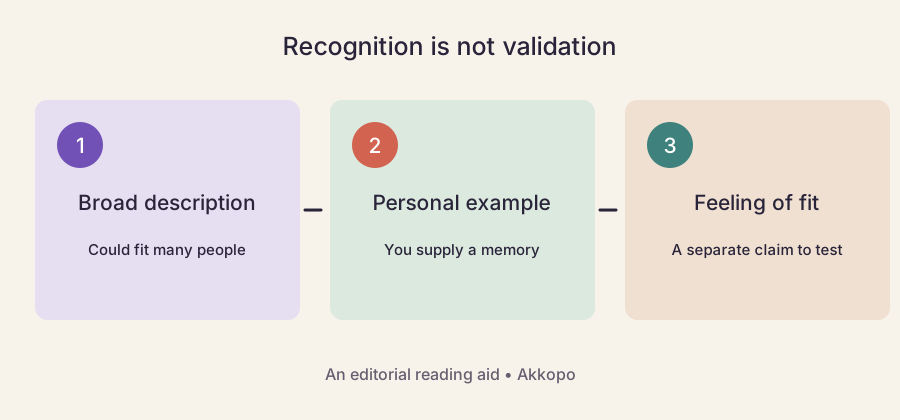
Why Personality Quiz Results Feel So Accurate
The Barnum effect explains why a quiz about weekends can describe your inner life with eerie, flattering precision.
Read the story ↗