How Good Is Your Memory, Really?
Names, lists, and lost parking spots: rate your recall on the goldfish-to-elephant scale.
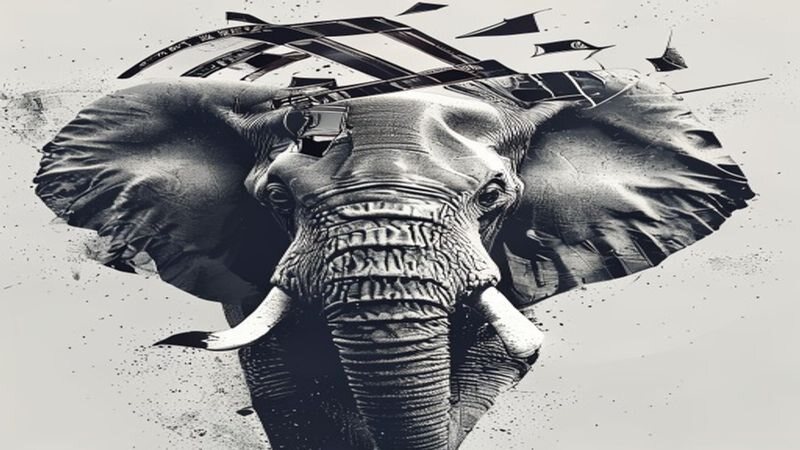
Memory keeps a strange filing system. It stores a commercial jingle from 2009 in triplicate, yet shreds the name of the person you met four minutes ago, along with any record of where the car is parked. Nobody fully controls which drawer things land in.
These seven questions are pure self-report, so honesty is the entire game. Grade yourself on names, errands, birthdays, and passwords, then claim your spot on the scale between goldfish and elephant. Fair warning: even the goldfish tier comes with perks the elephants quietly envy.
Read every possible result and what it means →
Inspect the scoring, question by question
The highest possible score here is 21. The original game divides scores into 4 bands; the bands contain different numbers of answer combinations. A high point total is not a measured percentile.
1. Someone introduces themselves at a party. How long does the name survive?
- Most of the night, with occasional flickers — 2 original points
- It evaporates during the handshake itself — 0 original points
- Years. I will greet them correctly in 2031 — 3 original points
- About ten minutes, unless I repeat it like a spell — 1 original points
These are the archived game’s option weights. Partial credit is a game rule, not a clinical or population measurement.
2. You march into the kitchen with clear purpose. What happens next?
- I stand there negotiating with the refrigerator for clues — 1 original points
- I grab the thing, plus two other things I remembered en route — 3 original points
- I leave with a snack and an unsolved mystery — 0 original points
- Ninety percent success rate, which I consider respectable — 2 original points
These are the archived game’s option weights. Partial credit is a game rule, not a clinical or population measurement.
3. Grocery run, no list, eight items. How many make it home?
- Four, and one of them is a candle — 0 original points
- All eight, retrieved in aisle order — 3 original points
- Six-ish, minus the one the whole trip was for — 1 original points
- Seven, and the eighth ambushes me in the parking lot — 2 original points
These are the archived game’s option weights. Partial credit is a game rule, not a clinical or population measurement.
4. Big mall, long visit. Where did you park?
- Level three, row F, beside the cart return — 3 original points
- I photograph the sign, because I have met myself — 1 original points
- General zone: correct. Exact row: negotiable — 2 original points
- That knowledge belongs to a previous version of me — 0 original points
These are the archived game’s option weights. Partial credit is a game rule, not a clinical or population measurement.
5. How do the birthdays of people you love get remembered?
- I know the month cold and the date mostly — 2 original points
- Dates, years, and which cake they had last time — 3 original points
- The group chat informs me, loudly, on the day — 0 original points
- Calendar alerts do all the heavy lifting — 1 original points
These are the archived game’s option weights. Partial credit is a game rule, not a clinical or population measurement.
6. A friend retells a story from your shared trip five years ago. You…
- Enjoy it as fresh new content — 0 original points
- Recall the main beats and half the dialogue — 2 original points
- Correct the small details, kindly but firmly — 3 original points
- Recognize it only once they reach the punchline — 1 original points
These are the archived game’s option weights. Partial credit is a game rule, not a clinical or population measurement.
7. Passwords. What's your honest system?
- Three variations of one old word and a prayer — 1 original points
- The reset link is, functionally, my password — 0 original points
- A manager app, plus a few memorized keepers — 2 original points
- Dozens live in my head, unrelated and uncrackable — 3 original points
These are the archived game’s option weights. Partial credit is a game rule, not a clinical or population measurement.
What happens across every possible answer pattern?
We counted all 16,384 patterns, treating each offered choice as equally likely. This is a synthetic rule check, not visitor research. It does not describe how real people answer.
| Result | Patterns | Share of patterns |
|---|---|---|
| Certified Goldfish | 323 | 1.97% |
| The Squirrel | 7,869 | 48.03% |
| The Owl | 7,456 | 45.51% |
| Full Elephant | 736 | 4.49% |
Download the full counts · Download Python script · Download rule inputs
To reproduce locally: python3 measure_legacy.py --input legacy-rule-inputs.json --output counts.json. Uses Python 3 and its standard library.
Judging your memory and testing it are different jobs
Everything here is self-report, which makes it a study of your beliefs about your memory rather than of your memory. Researchers call that territory metamemory, and the general finding is humbling: how people rate their own everyday recall on questionnaires lines up only loosely with how they perform on objective tasks. Donald Broadbent's Cognitive Failures Questionnaire, published in 1982, is one of the long-running instruments in this area, and even well-built scales of that kind explain a modest share of measured performance.
Mood is a large part of the noise. People who are tired, low, or under strain rate their memories more harshly regardless of how they actually do, while a good week nudges the self-assessment upward. Ratings drift with how you feel about yourself this month.
Recall is reconstruction, not playback
The videotape metaphor is comforting and false. Frederic Bartlett showed as much in his 1932 book Remembering, where English readers retelling a Native American folk tale steadily reshaped it towards their own expectations, trimming the unfamiliar and adding tidy causal links that were never there. Elizabeth Loftus and John Palmer extended the point in 1974: viewers asked how fast cars were going when they smashed into each other gave higher speed estimates than those asked about cars that hit, and were later likelier to report broken glass that never existed.
Each retrieval is a rebuild from fragments, and confidence is a poor guide to accuracy. A vivid, detailed memory can be wrong in load-bearing places while feeling entirely solid.
Why names go missing first
Proper names are the weakest link in the chain because they are arbitrary. Researchers describe the puzzle through the baker and Baker pair: told a man is a baker, you can hang the fact on ovens, bread, and flour; told his surname is Baker, you have a sound attached to a face and nothing else. Names carry no meaning to catch on, so retrieval has fewer routes in, which is why one so often stalls on the tip of your tongue with the first letter tantalisingly available.
Taking the result in the right spirit
Nothing here is diagnostic. There are no norms behind the tiers, no controlled conditions, and no comparison with anybody else, so the outcome cannot say whether your recall is unusual for your age. Ordinary forgetting is extremely common and rarely means anything at all.
If you have noticed a real change, though, that is worth a proper conversation with a doctor rather than a quiz result. Clinical assessment uses validated batteries administered in person, and it exists precisely because self-judgement is unreliable in both directions.
Reading context & limits
For background and a fuller source trail, read Are Online IQ and Brain Tests Accurate?. These references provide context; they do not validate the entertainment result or every historical detail in the archived essay.
- Memory processes — OpenStax Psychology 2e
- Intelligence — American Psychological Association
- IQ — Encyclopaedia Britannica
Content lead: LISA. Updated October 25, 2026. Send a specific factual correction.